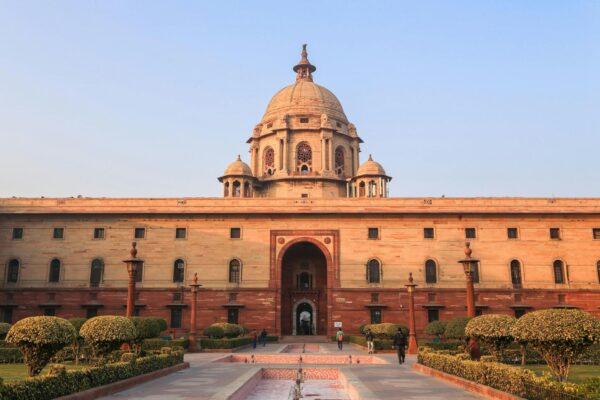
1. The Constitution of India
Origins & Basic Structure
- The Constitution of India came into force on 26 January 1950, making India a sovereign, socialist, secular, democratic republic. India Government+2Wikipedia+2
- It was drawn up by the Constituent Assembly, which served both as a framers’ body and as the first parliament. Wikipedia+1
- The Constitution is the supreme law of the land, meaning all institutions (executive, legislature, judiciary) must act in accordance with it. ConstitutionNet+1
Key Features
- Preamble: Declares India to be a sovereign, socialist, secular, democratic republic. It states the justice (social, economic, political), liberty, equality, and fraternity as its core values.
- Federal structure with unitary features: Powers are divided between Centre and States via Union, State, and Concurrent Lists. Some powers of the Centre override States where so provided.
- Separation of Powers: Legislature makes laws, executive implements, judiciary interprets. Though overlaps exist (minister must be MP, etc.).
- Fundamental Rights & Directive Principles: Fundamental Rights guarantee civil liberties; Directive Principles encourage social welfare, justice. Courts can enforce fundamental rights; Directive Principles are non-justiciable (i.e. not directly enforceable by the courts), but influence lawmaking.
- Judicial Review: Courts (especially Supreme Court) can invalidate laws or executive acts that violate the Constitution. Also, through key cases (e.g. Kesavananda Bharati, 1973), the courts have held that Parliament cannot abrogate the basic structure of the Constitution, even by amendment. ConstitutionNet
Amendment Procedure
- Article 368 provides that amendments may be made by Parliament by introducing a Bill in either house, passed by a special majority: a majority of total membership and two-thirds of members present and voting. Constitution of India
- Some amendments also require ratification by at least half of the State Legislatures (for example, when it affects federal structure, power of states, representation of states in Parliament, etc.) Constitution of India
- There are limitations—Parliament cannot amend the basic structure of the Constitution. ConstitutionNet
2. The Parliament of India & the New Parliament House (Sansad Bhavan)
Composition & Structure
- Parliament of India consists of three parts: Lok Sabha (House of the People), Rajya Sabha (Council of States), and the President of India. India Government+2Wikipedia+2
- Lok Sabha: Directly elected by citizens of India. As of now, it has 543 seats. The term is five years, unless dissolved earlier. Minimum age for members is 25. Wikipedia+1
- Rajya Sabha: Not subject to dissolution. Members serve six-year terms; one third of members retire every two years. Members are elected indirectly by State Legislatures; 12 nominated by President for their expertise. Minimum age is 30. Wikipedia+1
Powers & Functions
- Legislation: Parliament enacts laws on subjects in the Union and Concurrent Lists. For laws on subjects in State List, only the states may legislate, except in certain conditions.
- Amendment of Constitution: Via Article 368 as above.
- Financial Powers: Budget, taxation, money bills (which must originate in Lok Sabha), control over public expenditure.
- Oversight: Question Hour, debates, committees, no confidence motions etc., hold the executive accountable.
- Emergency Powers: Certain constitutional provisions allow central government expanded powers in emergency situations.
New Parliament Building (Sansad Bhavan)
- Inaugurated on 28 May 2023. The older Parliament building (the “Old Parliament House” or “Samvidhan Sadan”) had space constraints and structural issues. New building is meant to be modern, spacious, accommodating future growth. Wikipedia+2Wikipedia+2
- The new building is triangular in shape. It houses an expanded Lok Sabha hall (capacity ~888 members) and Rajya Sabha hall (capacity ~384 members). For joint sessions, it can accommodate up to ~1,272 members. Wikipedia+1
- The design draws symbolic motifs: e.g. Lok Sabha hall inspired by the peacock (national bird), Rajya Sabha hall by lotus (national flower). There is also a dedicated Constitutional Hall that is meant to represent the people, etc. Wikipedia+1
- The building has multiple gates with symbolic names: Gyan Dwar (Knowledge Gate), Shakti Dwar (Power Gate), Karma Dwar (Karma Gate). Wikipedia
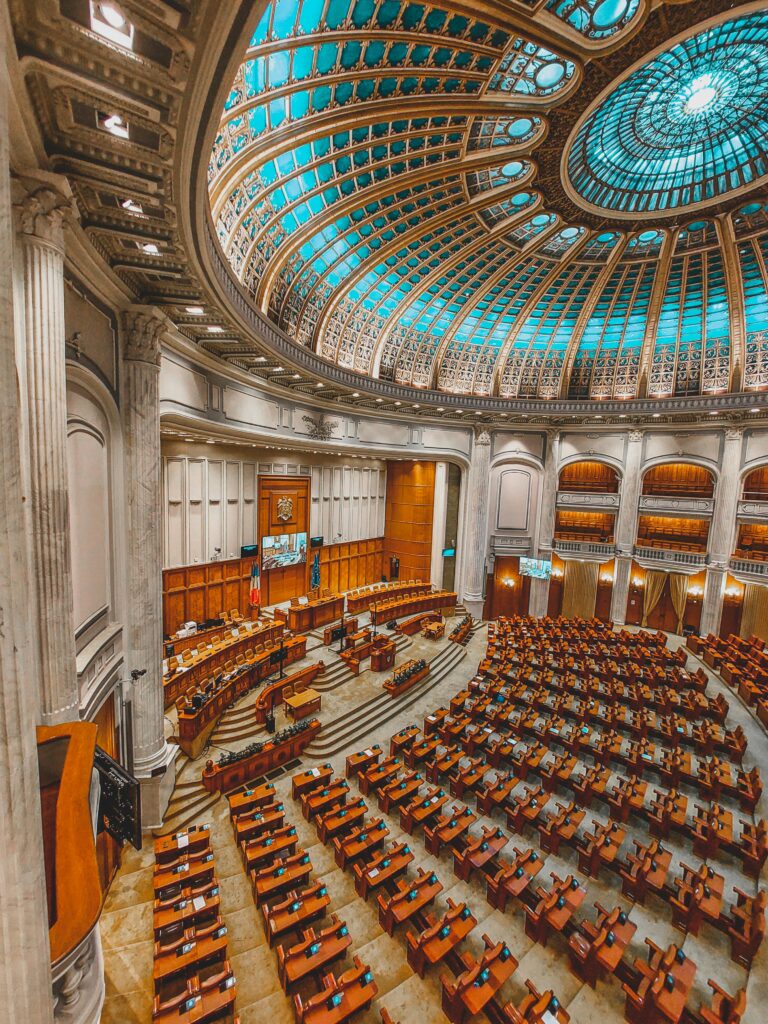
3. Rules and Procedure of Parliament
The Constitution provides that each House of Parliament may frame its own rules for procedure and conduct of business, but subject to certain constitutional provisions. Ministry of Parliamentary Affairs+1
Here are the key rules and features:
| Rule / Procedure | Details |
|---|---|
| Rule-making power | Under Article 118, each House (Lok Sabha, Rajya Sabha) may make rules to regulate its own procedure and conduct of business. Until such rules are made, the old rules from the Dominion Legislature apply, with modifications. Ministry of Parliamentary Affairs |
| Standing Orders | Complementary to rules; cover session schedules, attendance, debates, question hour, motions, etc. |
| Language | As per Article 120, business of Parliament is transacted in Hindi or English. A member who can’t express adequately in either may address in his/her mother tongue with permission. Ministry of Parliamentary Affairs |
| Financial Bills | Money bills must originate in the Lok Sabha; Rajya Sabha has limited powers over finance bills. Also, bills that involve expenditure from the Consolidated Fund need the President’s recommendation. Ministry of Parliamentary Affairs+1 |
| Joint Sessions | In case of deadlock between Lok Sabha and Rajya Sabha, a joint sitting may be held. The Speaker of Lok Sabha presides unless otherwise provided. Ministry of Parliamentary Affairs+1 |
| Discussions & Privileges | Members have privileges; parliamentary privilege protects what is said in Parliament from outside judicial scrutiny (within limits). Also, certain matters (like discussion of judge’s conduct) are restricted unless formal procedures are followed. Ministry of Parliamentary Affairs |
| Quorum | A minimum number of members must be present for the House to conduct business. (Rules define quorum). Without quorum, proceedings may not continue. |
| Ordinances | When Parliament is not in session, the President may promulgate ordinances, which have the force of law, subject to Parliament’s approval later. Ministry of Parliamentary Affairs |
| Validity of Proceedings | As per Article 122, courts shall not question validity of proceedings in Parliament on grounds of procedural irregularity. Ministry of Parliamentary Affairs |
4. Relationship Between Constitution → Parliament → Procedures
- The Constitution lays out the framework: What Parliament is, its powers, its limits.
- Within that framework, Parliament has autonomy to decide internal procedure (debates, rules of conduct, schedule etc.) provided they do not violate constitutional constraints.
- The Constitution also limits Parliament’s power (e.g. basic structure doctrine, requirement of special majorities, state ratification etc.).
5. Significance & Recent Changes
- The New Parliament Building physically reflects modern India’s democratic aspirations: more capacity, better facilities, symbolic elements. Drishti IAS+1
- Recent constitutional amendments illustrate Parliament’s ongoing role in evolving the Constitution (for example reservation for women Bill etc.)